
Top Plumbers Near Me in Detroit, Michigan
LIVE PLUMBING AUDIT 2026
✓ Verified Pros
🛡️ PHCC & EPA DATA
Plumbing Hub: Detecting...
Verified Statistics
Reliability Score
A+
✓ Trusted Hub
Local Specialists
--
--
License & Credential Check
💧
Scan Local Plumbers
Real-time License Verification
Checking PHCC Database...
> Validating Master License...
> Insurance Verification...
Pro Trust Index
--
TOP RATED
Environmental Factors
Corrosion Risk: --
Hard Water: --
🔄 Last Data Sync: | 256-bit Encrypted Results
Plumbing Contractors: Detroit, Michigan
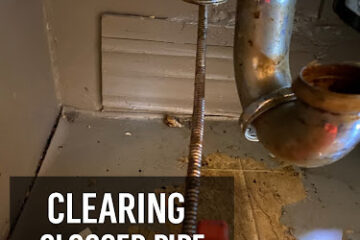

PLUMBING AUDIT 2026
Cost Estimator for Albuquerque
Estimated Fair Price
$265 - $340
Parts: $50
Labor: $250
✨ Based on 2026 local rates for Albuquerque
Local Plumbing Realities: Detroit, MI
2026 Pro Audit: Pricing, Pipe-bursts, and Scams.
What You're Actually Paying For When You Call a Detroit Plumber ▼
Look, I'm gonna lay it out straight because I'm tired of homeowners thinking we're just twisting a wrench for five minutes and charging $250. That service call fee you see ($175-$300 here in Detroit as of 2026) covers the truck, the gas (which ain't cheap), the liability insurance that costs me $18,000 a year, and the fact that I've got 25 years of knowledge in my head that keeps YOUR basement from turning into Lake Michigan. The actual labor? That's separate. I've seen guys advertise $89 service calls and then hit you with a $600 "diagnostic fee" once they're in your door. That's the cowboy nonsense that gives us all a bad name. Here's what real pricing looks like in Detroit right now - basic drain clearing runs $150-$350 depending on if it's a simple P-trap clog or if we're running a snake 75 feet into your main line. Water heater replacement (and we're talking a standard 40-50 gallon tank unit) sits between $1,800-$2,800 installed. You want tankless? Add another grand minimum, and that's IF your gas line can handle it (most older Detroit homes can't without an upgrade). Hydro-jetting your sewer main because tree roots decided to throw a party in there? $450-$800. And don't even get me started on the supply chain issues we're STILL dealing with in 2026 - sometimes I'm waiting three weeks for a specific valve that used to be next-day delivery.
Detroit Winters Will MURDER Your Pipes (And Your Wallet) ▼
I've seen more burst pipes in this city than I can count, and January through February? My phone doesn't stop. Here's the cold hard truth - Detroit's freeze-thaw cycles are absolutely brutal on plumbing systems. We're talking temps that drop to 5°F one night and jump to 35°F two days later. That expansion and contraction? It's a death sentence for old galvanized pipes. The houses in Warrendale, Grandmont, all these neighborhoods built in the 1940s-1960s - they've got copper that's paper-thin from decades of corrosive Detroit water (yeah, it's not just Flint that had water issues, ours is just hard as rocks and eats through everything). I get calls every winter: "There's water pouring through my ceiling." Nine times out of ten it's a supply line in the attic that nobody knew existed. Emergency burst pipe calls run $350-$600 just to show up after-hours, and that's BEFORE we fix anything. The fix itself? Could be $200 if you're lucky and it's an exposed pipe we can patch. Could be $3,000 if we're cutting through walls and ceilings. Best advice I ever give - when it's gonna drop below 20°F, let your faucets drip (not stream, just drip). Costs you maybe $5 extra in water. Saves you thousands. Also, if you've got a crawl space, get it insulated. I don't care if it costs $1,200. One burst pipe costs more.
The Sump Pump Situation Nobody Talks About ▼
Detroit's built on clay soil. Heavy, dense, water-holding clay. Your sump pump isn't optional - it's the only thing standing between you and a flooded basement every spring thaw. I've been in basements in Redford and Dearborn Heights where homeowners are running pumps from the 1980s (held together with rust and prayers) and they're shocked when I tell them these things have a lifespan of 7-10 years MAX. A new sump pump installation runs $800-$1,500 depending on if you need a battery backup system (YOU DO). Spring of 2025 we had those crazy rains - remember that? - and I was replacing burned-out pumps for $400 in labor alone because everyone waited until they failed. Here's what kills me: people will spend $6 on a latte every day but won't spend $130 on an annual sump pump check. We test the float switch, clean the intake screen, make sure the discharge line isn't frozen or clogged. Takes me 20 minutes. Could save your finished basement that you spent $40,000 on. The battery backup systems (around $600-$900 installed) will run your pump during power outages, which happen ALL THE TIME in Detroit during storms. DTE's grid is about as reliable as a 1987 Yugo.
How to Spot a COWBOY Plumber in Southeast Michigan ▼
Look, the labor shortage is real. We've got maybe half the qualified plumbers we need in the metro Detroit area, and that's created an environment where guys who watched three YouTube videos think they can charge professional rates. Here's your red flag checklist - if they can't produce a Michigan master plumber's license (not just journeyman, MASTER), walk away. If they want cash only and won't give you a written estimate, RUN. If they show up in a unmarked van with no company name, you're asking for trouble. I've been called to fix "repairs" done by unlicensed hacks, and I've seen DANGEROUS CHEMICALS like purple primer used on water supply lines (that's for DWV - drain, waste, vent - only, and it's TOXIC). I've seen shark bite fittings holding together gas lines (absolutely against code and a potential explosion hazard). Real plumbers pull permits for water heater replacements, sewer main work, and any major repipes. The fly-by-night guys don't because they're not licensed to. That permit costs me $150-$300 depending on the job, but it means an inspector verifies the work is safe. When you're getting quotes, ask these questions: "Are you licensed and insured?" "What's your warranty policy?" (Mine's 2 years on labor, manufacturer warranty on parts.) "Will you pull permits?" A real pro won't hesitate. A cowboy will give you excuses.
Main Line Nightmares and What They ACTUALLY Cost ▼
Your main sewer line - that's the big pipe (usually 4-6 inches) that runs from your house to the city connection at the street. In Detroit, a LOT of these are original clay tile from 60-80 years ago, and they're collapsing. Tree roots from those big maples everyone's got? They find every crack and joint, then grow into a massive root ball that clogs everything. When your basement floor drains are backing up with sewage (yeah, it's as bad as it sounds), that's usually a main line issue. Camera inspection runs $300-$450 - I drop a waterproof camera down your cleanout and we see exactly what's happening. If it's roots, hydro-jetting (high-pressure water that cuts through roots and scale) costs $450-$800. But here's the gut punch - if that camera shows the pipe is collapsed or offset (ground settled and broke the clay), you're looking at excavation. Digging up and replacing a main line in Detroit runs $8,000-$15,000 depending on length and depth. I've done jobs where the line runs under a concrete driveway - add another $2,000-$3,000 for concrete work. Some neighborhoods qualify for the city's shared cost program where they'll split the expense if the break is near the connection point (call Detroit Water and Sewerage, they're actually helpful sometimes). Trenchless pipe lining is an option - we pull a resin-coated liner through your existing pipe and cure it in place. Costs $150-$250 per foot, so a 50-foot line is $7,500-$12,500. Sounds expensive but you're not destroying your yard.
Emergency Plumbing: What Qualifies and What Can Wait ▼
I get called at 2 AM for stuff that could've waited until morning, and I also get calls at 2 PM for stuff that should've been called in at 2 AM. Real emergencies: burst pipes actively flooding your house, sewage backing up into your home, gas smell (GET OUT AND CALL THE FIRE DEPARTMENT FIRST, then the gas company, THEN me), no water in winter (pipes might be frozen and ready to burst). Those justify emergency rates ($350-$600 just to show up after hours and weekends). What's NOT an emergency: a dripping faucet (annoying but not destructive), a toilet that won't flush if you've got a second bathroom, a water heater that's "making a weird noise" but still producing hot water. I've seen homeowners panic over a toilet that won't stop running - that's a $12 flapper valve and a YouTube video, not a $400 emergency call. Here's a pro tip from the trenches: know where your main water shutoff is. Right now, stop reading and go find it. It's usually in the basement near where the water line enters, or in a concrete box in your front yard. If a pipe bursts, turning that off stops the flood while you wait for help. I've been to houses where people didn't know where it was and they had 6 inches of water in the basement because a supply line to the washing machine let go. That's $10,000 in water damage (floors, drywall, mold remediation) that could've been $500 in repairs if they'd shut the water off immediately.
The Real Talk on Choosing a Detroit Plumber ▼
Twenty-five years in this business and I've seen the industry change big time. The old-timers who taught me are retired or dead, and we're not replacing them fast enough. Trade schools are practically begging people to enroll, but everyone wants to sit at a desk and code websites (no offense). What this means for you: good plumbers are booked out. If you call me for a non-emergency water heater replacement, I might be 2-3 weeks out. The guys who can come "today" are either slow for a reason or they're overcharging because they can. Here's how to actually find someone reliable in Detroit - ask your neighbors (especially the ones who've lived here 20+ years, they know who's legit). Check the Better Business Bureau (yeah, it's old school but it works). Look for family-owned companies that have been around at least 10 years - we've got skin in the game and a reputation to protect. Big franchise operations (won't name names but you see their trucks everywhere) charge 30-40% more because of franchise fees and advertising costs. That $2,000 water heater job? They're charging $2,800 for the same work. But they CAN get someone there faster because they've got 20 trucks. It's a trade-off. My advice: get three quotes for any job over $1,000. Make sure they're itemized (labor separate from materials). Ask about warranties. And trust your gut - if something feels off about a plumber, it probably is. We should show up on time (or call if we're running late), explain what's wrong in plain English (not plumber-speak designed to confuse you), give you options (not just the most expensive one), and clean up our mess when we're done. That's basic professionalism, but you'd be surprised how many guys don't do it.
New York
Los Angeles
Chicago
Houston
Phoenix
Philadelphia
San Antonio
San Diego
Dallas
San Jose
Austin
Jacksonville
Fort Worth
San Francisco
Seattle
Denver
Washington
Oklahoma City
El Paso
Boston
Las Vegas
Detroit
Louisville
Portland
Memphis
Baltimore
Milwaukee
Albuquerque
Tucson
Fresno
Sacramento
Mesa
Atlanta
Kansas City
Colorado Springs
Raleigh
Miami
Omaha
Long Beach
Virginia Beach
Oakland
Minneapolis
Tampa
Orlando
Charlotte
Indianapolis
Columbus
Nashville