
Top Plumbers Near Me in Portland, OR
LIVE PLUMBING AUDIT 2026
✓ Verified Pros
🛡️ PHCC & EPA DATA
Plumbing Hub: Detecting...
Verified Statistics
Reliability Score
A+
✓ Trusted Hub
Local Specialists
--
--
License & Credential Check
💧
Scan Local Plumbers
Real-time License Verification
Checking PHCC Database...
> Validating Master License...
> Insurance Verification...
Pro Trust Index
--
TOP RATED
Environmental Factors
Corrosion Risk: --
Hard Water: --
🔄 Last Data Sync: | 256-bit Encrypted Results
Plumbing Contractors: Portland, OR


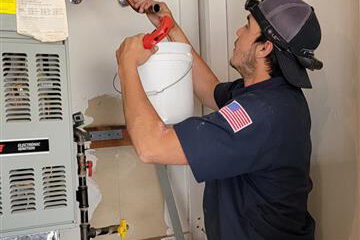
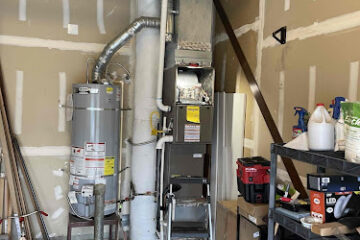
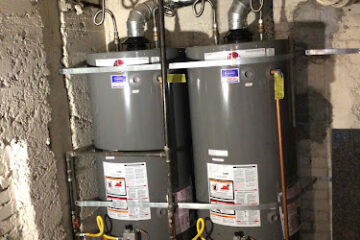
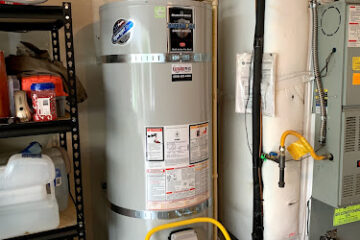

PLUMBING AUDIT 2026
Cost Estimator for Albuquerque
Estimated Fair Price
$265 - $340
Parts: $50
Labor: $250
✨ Based on 2026 local rates for Albuquerque
Local Plumbing Realities: Portland, OR
2026 Pro Audit: Pricing, Pipe-bursts, and Scams.
What You're Actually Gonna Pay in Portland (2026 Reality Check) ▼
Look, I'm not gonna sugarcoat this. Portland plumbing ain't cheap, and if someone quotes you bottom-dollar pricing, RUN. Here's what real numbers look like when you call a legitimate outfit: Service calls start at $175 minimum, but most reputable shops are charging $225-$300 just to roll a truck and diagnose. That's before we touch a wrench. Water heater replacement? You're looking at $1,800 for a basic 40-gallon tank install, but that jumps to $3,200-$4,000 if you're going tankless (which half my customers want now because everyone's obsessed with energy savings). Hydro-jetting your main line because tree roots invaded from those beautiful Portland maples? $450-$900 depending on access and how bad you let it get. I've seen people ignore slow drains for months, then act shocked when I quote them $1,200 to clear a line that's basically a root jungle. Sewer scope inspections run $275-$400, and yeah, you SHOULD get one before buying any house built before 1985 in this city. Don't even get me started on permit costs - Portland makes you pull permits for water heater swaps, and that's another $150-$200 the city takes before we even start work.
Emergency Pipe Bursts - The 2 AM Phone Calls That Haunt Me ▼
Here's the cold hard truth: Portland's freeze-thaw cycles are BRUTAL on older copper and galvanized pipes. We don't get the sustained deep freezes like Minnesota, but those nights when it hits 28°F and everyone thinks "it's fine"? That's when I get the panicked calls at 2 AM because a pipe in the crawlspace just exploded. Emergency rates are 1.5x to 2x normal pricing - you're paying $350-$500 just for the emergency dispatch, THEN parts and labor. I've seen $3,000 water damage bills from a burst that could've been prevented with $40 worth of pipe insulation. The worst are those 1920s bungalows in SE Portland (you know the ones, beautiful Craftsman homes with original plumbing). Those galvanized supply lines? Time bombs. They don't burst clean - they corrode from the inside, restrict flow for years, then BAM, you've got a geyser in your wall cavity. What kills me is when homeowners try the DIY shut-off and can't find their main valve (or it's corroded shut because it hasn't been turned in 15 years). Pro tip that'll save you thousands: Know where your main shut-off is, and EXERCISE IT twice a year. Turn it off and back on. If it won't budge, call us during business hours to replace it for $400, not during a flood emergency for $1,200.
The Portland Plumber Shortage (And Why Your Wait Time Sucks) ▼
Nobody wants to talk about this, but I will. There's maybe 40% of the qualified journeyman plumbers this city actually needs. I've been trying to hire a fourth guy for eight months - can't find anyone worth a damn who isn't already working or asking for $55/hour (which breaks the business model). What this means for YOU: wait times are insane. Non-emergency work? You're booking 2-3 weeks out with the good shops, minimum. Some outfits are pushing 4-6 weeks for anything that's not flooding your house RIGHT NOW. This created a monster problem - COWBOY PLUMBERS everywhere. Guys with a truck and a pipe wrench who watched YouTube videos and think they're qualified. I've done probably $80,000 in repair work over the last two years just fixing what these hacks destroyed. Saw one install a water heater with the T&P valve draining into a bucket (INSANELY DANGEROUS - those are designed to prevent explosions). Another genius cross-threaded a gas line fitting on a tankless install. You know what happens with gas leaks? Houses explode. Look for licensed contractors - in Oregon that's a valid CCB number you can verify online. Don't care how nice the Craigslist ad looks.
What Actually Breaks in Portland Homes (Climate-Specific Nightmares) ▼
Portland's wet nine months a year, then dry and hot for three. This schizophrenic weather pattern destroys plumbing systems in ways my buddies in Arizona never see. Sump pumps are CRITICAL here - I've replaced probably 600 in my career, and most fail during that first big November storm because homeowners never test them. A quality sump pump install runs $800-$1,400 depending on whether you need battery backup (you do, if your basement's ever flooded). Cast iron sewer lines under those beautiful old Portland homes? They're rotting from the outside in because our soil stays wet and acidic. A full sewer line replacement from house to street runs $8,000-$18,000 depending on distance and whether we're going under driveways. I've seen people finance these like cars. The moisture also means P-trap evaporation is rarely your problem (unlike desert climates), but we get INVASIVE TREE ROOTS like nowhere else. Those Japanese maples, Douglas firs, willows? Their roots smell that nutrient-rich sewer water and crack through clay pipes like they're nothing. Hydro-jetting becomes a yearly maintenance thing for some properties, not a one-time fix.
How to Spot a Legitimate Portland Plumbing Outfit ▼
After 25 years in this city, I can smell a scam operation from three blocks away. Here's what you're checking: Valid Oregon CCB license number (Construction Contractors Board - look it up on their website, takes 30 seconds). Bonded and insured - ask for proof, real companies hand it over without hesitation. Trucks with actual company names and phone numbers, not a magnetic sign slapped on a rental (I'm serious, this is a red flag). They should pull permits for water heater replacements, gas line work, sewer connections - if they say "permits are optional" or "we can skip that to save you money," you're talking to someone who's gonna disappear when their work fails inspection or burns your house down. Pricing should be detailed - not a scribbled number on a napkin, but a written estimate breaking down labor, materials, permits, disposal fees. The good shops use actual invoicing software now. And here's a weird one that's actually reliable: they should ask about your water pressure, existing plumbing age, and whether you've had work done before. Cowboys just quote a number. Pros ask questions because every house is different, and we've been burned (sometimes literally) by assuming.
The Services Nobody Talks About (But You're Gonna Need) ▼
Everybody knows about drain clearing and water heaters. Let me tell you what ACTUALLY keeps Portland homes from turning into money pits: Sewer scope inspections before you buy ($275-$400, and I've saved clients from $30,000 nightmares with these). Whole-house water pressure regulation - Portland water pressure varies wildly by neighborhood, and I've seen 95 PSI destroy toilet fill valves, washing machine hoses, and water heater tanks within two years (pressure regulator install: $450-$650). Earthquake shut-off valves for gas lines - we're overdue for the Big One, and these automatically shut gas flow when the ground moves ($800-$1,200 installed, might save your life). Backflow preventer testing - it's required annually by the city for any commercial property and many residential irrigation systems, runs $85-$150 (boring but you get fined if you skip it). Crawlspace waterproofing and drainage - not sexy, but half the foundation problems I see started because water's been pooling under the house for years ($2,500-$8,000 depending on size). Tankless water heater descaling - if you've got hard water and a tankless unit, you need this done every 18-24 months or your $3,500 heater becomes a $3,500 brick ($200-$300 for the service, way cheaper than replacement).
When to Call Emergency vs When to Wait (And Save Your Money) ▼
Look, I make bank on emergency calls, but I'm gonna be straight with you because I'm tired of people wasting money out of panic. CALL EMERGENCY (and pay those brutal rates): Active flooding, gas smell (get out of the house FIRST, then call), sewage backing up into living spaces, no water in winter when pipes might be frozen, water heater actively leaking (not just condensation, I mean POURING water). These are "gonna cause thousands in damage or kill you" situations. DON'T call emergency for: Slow drains (annoying but not destructive), dripping faucets (put a bucket under it), running toilets (turn off the angle stop valve and wait for business hours), low water pressure (unless it's sudden and complete loss), weird noises from pipes (usually harmless, sometimes air in lines). I've had people pay me $450 to show up at midnight for a toilet that won't stop running. I fixed it in four minutes by adjusting the float. That same fix during business hours? $175 total. The exception: if you're elderly, disabled, or the problem affects your only bathroom and you can't function without it, then yeah, it's worth the emergency rate for your quality of life. Just know you're paying premium pricing for convenience and after-hours labor, not because the repair itself costs more. Most emergency calls I run are $600-$1,500 all-in (dispatch, labor, parts, markup for middle-of-the-night inventory pulls).
New York
Los Angeles
Chicago
Houston
Phoenix
Philadelphia
San Antonio
San Diego
Dallas
San Jose
Austin
Jacksonville
Fort Worth
San Francisco
Seattle
Denver
Washington
Oklahoma City
El Paso
Boston
Las Vegas
Detroit
Louisville
Portland
Memphis
Baltimore
Milwaukee
Albuquerque
Tucson
Fresno
Sacramento
Mesa
Atlanta
Kansas City
Colorado Springs
Raleigh
Miami
Omaha
Long Beach
Virginia Beach
Oakland
Minneapolis
Tampa
Orlando
Charlotte
Indianapolis
Columbus
Nashville