
Top Plumbers Near Me in Seattle, WA
LIVE PLUMBING AUDIT 2026
✓ Verified Pros
🛡️ PHCC & EPA DATA
Plumbing Hub: Detecting...
Verified Statistics
Reliability Score
A+
✓ Trusted Hub
Local Specialists
--
--
License & Credential Check
💧
Scan Local Plumbers
Real-time License Verification
Checking PHCC Database...
> Validating Master License...
> Insurance Verification...
Pro Trust Index
--
TOP RATED
Environmental Factors
Corrosion Risk: --
Hard Water: --
🔄 Last Data Sync: | 256-bit Encrypted Results
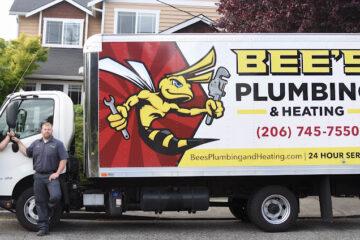
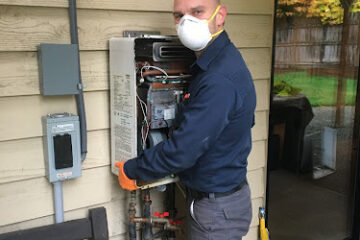
Plumbing Contractors: Seattle, WA



PLUMBING AUDIT 2026
Cost Estimator for Albuquerque
Estimated Fair Price
$265 - $340
Parts: $50
Labor: $250
✨ Based on 2026 local rates for Albuquerque
Local Plumbing Realities: Seattle, WA
2026 Pro Audit: Pricing, Pipe-bursts, and Scams.
What You're Actually Gonna Pay in Seattle (2026 Reality Check) ▼
Look, I'm not gonna sugarcoat this. Seattle plumbing costs are brutal right now. Service calls START at $175 if you're lucky - most reputable outfits charge $225-$300 just to show up at your door. Why? Labor shortage. Permits. Insurance that'll make your eyes water.
Here's what I'm seeing in 2026: Basic drain cleaning runs $200-$450 depending on how bad you let it get (and trust me, people wait WAY too long). Hydro-jetting that main line? You're looking at $500-$900 because we're talking serious equipment and expertise. Water heater replacement - and this is where it hurts - runs $1,800 for a basic 40-gallon tank up to $4,000+ for tankless installations. That tankless number jumps fast when your electrical panel needs upgrading (which it probably does in these old Seattle houses).
Sump pump installations? $800-$2,500. Re-piping a bathroom? Don't sit down - $3,000-$8,000. And if some COWBOY tells you he'll do it for half that, RUN. I've seen what happens next and it ain't pretty.
The Seattle Climate Is ACTIVELY TRYING To Destroy Your Pipes ▼
Here's the cold hard truth about plumbing in the Pacific Northwest - our weather is a special kind of hell for your pipes. We don't get those Texas deep freezes (usually), but what we DO get is constant moisture, temperature swings, and soil that moves like it's got a mind of its own.
I've seen more slab leaks in Seattle than anywhere else I've worked. Why? Clay soil. When it rains (which is, you know, October through June), that soil expands. When we get those random summer dry spells, it contracts. Your foundation moves. Your pipes? They're along for the ride until they CRACK.
Freeze damage hits different here too. We'll cruise along at 45 degrees all winter, then BAM - one night drops to 25 and nobody's ready. Hose bibs burst. Crawl space pipes split. I get 30 calls in one morning because half of Ballard forgot to disconnect their garden hoses. (Disconnect your damn hoses, people.)
The moisture means more corrosion too. Those old galvanized pipes in your 1940s Craftsman? They're rusting from the OUTSIDE in because our crawl spaces are basically swamps half the year.
When That Pipe Bursts At 2 AM - Your Emergency Game Plan ▼
Panic doesn't fix pipes. Here's what you DO:
Shut off the main water valve - RIGHT NOW. Not after you grab your phone. Not after you move the furniture. NOW. It's usually in your crawl space or basement, sometimes in a ground-level box outside. Find it TODAY before you need it at 2 AM in the dark.
Turn off your water heater. Gas or electric, doesn't matter - if there's no water flowing through it and it keeps heating, you're gonna have bigger problems. Flip that breaker or turn that gas valve to OFF.
Call a REAL emergency plumber. Not the first Google ad you see (those are lead generation companies that'll sell your info to five different plumbers and charge each of them for it). Look, I know you're stressed, but here's what legit 24-hour emergency service costs in Seattle right now: $300-$500 just to show up after hours, then $150-$250/hour for labor. Yes, it's expensive. Know what's MORE expensive? Water damage. That burst pipe can dump 400+ gallons per HOUR into your walls.
Document everything with photos BEFORE cleanup - your insurance company's gonna want proof. Move what you can to dry areas but don't go playing hero in standing water if there's ANY chance of electrical contact.
One more thing - if it's a sewer main backup (you'll know from the smell and the location), stay OUT of that water. That's not just water, that's BIOHAZARD material and you need professionals with proper gear.
How To Spot The Cowboys And Hacks (They're EVERYWHERE) ▼
The plumbing trade has a serious problem right now. Labor shortage means anybody with a wrench and a truck thinks they're a plumber. I've seen nightmares.
Red flags that scream AMATEUR: No physical business address (just a cell phone). Won't pull permits (HUGE problem - permits exist for YOUR safety, not to annoy contractors). Asks for full payment upfront (50% deposit MAX on big jobs, otherwise you pay when it's done and inspected). Shows up in an unmarked van (pros have company vehicles with licensing visible). Can't produce current liability insurance and bonding paperwork on the spot.
Here's a story - got called to a house in Greenwood last month where a "plumber" (using that term VERY loosely) had installed a tankless water heater. No expansion tank. Undersized gas line. Vented it wrong so carbon monoxide was dumping into the attic. The homeowner paid $2,200 for an installation that could've KILLED them. I had to rip it all out and do it right - another $3,800.
Washington State requires plumbers to be licensed. Period. Ask for that license number and VERIFY it on the Department of Labor & Industries website. Takes two minutes. Could save you thousands (or your life).
And those Yelp reviews? Half are fake. Check the BBB. Ask your neighbors. Real reputations are built over YEARS, not with 47 five-star reviews that all appeared in the same month.
The Jobs You Think Are DIY (But Absolutely Aren't) ▼
YouTube has convinced an entire generation they can plumb their own house. They can't.
Look, I'm all for homeowners changing out a faucet or replacing a toilet flapper. That's basic stuff. But I've seen what happens when people get ambitious, and it costs them WAY more than hiring a pro from the start.
Don't DIY these - just don't: Anything involving your main water line or sewer line (you hit the wrong thing, you're looking at $10,000+ in repairs). Gas line work of ANY kind (explosion risk - not being dramatic, this KILLS people). Water heater replacement (code requirements are complex, permits required, and improper installation causes house fires and carbon monoxide deaths). Re-routing drain lines (venting requirements are complicated and if you mess it up, every drain in your house will gurgle and smell like a sewer). Anything in a crawl space if you don't know what you're doing (tight spaces, limited visibility, easy to cross-thread fittings or make connections that'll fail in six months).
The P-trap under your sink? Sure, replace it. Install a whole new bathroom? Call a professional. I've been doing this 25 years and I STILL run into situations where I need to stop and think through the solution. This trade has depth that internet tutorials can't teach.
That $300 service call you're trying to avoid? It's cheaper than the $4,000 water damage repair after your DIY job fails while you're on vacation.
What Actually Breaks In Seattle Houses (And When) ▼
Every region has its patterns. Seattle's old housing stock means I see the same failures over and over.
Galvanized pipes (common in pre-1960 houses) - these are TICKING TIME BOMBS. They corrode from the inside out. You'll notice decreasing water pressure first, then rusty water, then leaks. If your house still has galvanized supply lines, budget $4,000-$12,000 for a full re-pipe. Not if - WHEN.
Sewer line roots - our big trees (beautiful, yes, but also DESTRUCTIVE) send roots hunting for water. Your sewer main line is a target. Clay pipes (most houses built before 1980) crack over time, roots infiltrate, and suddenly you've got a backup. Hydro-jetting clears them temporarily ($500-$900) but if the pipe's compromised, you're looking at $8,000-$20,000 for replacement depending on depth and distance to the street connection.
Sump pumps fail - usually during the WORST possible storm (because that's when they're working hardest). These things have a 7-10 year lifespan. If yours is older than that, replace it BEFORE it fails. Reactive replacement when your crawl space is flooding costs more and causes water damage you could've avoided.
Water heaters - 8-12 year lifespan, period. I don't care what the manufacturer says. If yours is over 10 years old, start shopping. They don't gradually die - they catastrophically FAIL and dump 40-50 gallons into your house.
Disposal units - 10-12 years MAX in Seattle because our soft water actually accelerates certain types of corrosion (weird but true). When they leak, they leak UNDER your sink where you don't see it until the cabinet bottom is rotted out.
Finding Legitimate Plumbing Help In Seattle Without Getting Fleeced ▼
Real talk about finding good plumbers in this market: it's harder than it should be.
Start with the Washington State Department of Labor & Industries contractor lookup. Every legit plumber has a license number - verify it's current and check for violations. This is NON-NEGOTIABLE.
Get three quotes for major work (anything over $1,000). But here's the thing - don't just pick the cheapest. I see this constantly. Three bids come in at $3,200, $3,400, and $1,800. Guess which one the homeowner picks? Guess which one calls me six months later to fix the disaster?
Ask these specific questions: "Will you pull permits?" (answer better be yes for any major work), "What's your warranty on parts and labor?" (minimum one year on labor, manufacturer warranty on parts), "Are you licensed, bonded, and insured?" (demand proof documentation), "Who's actually doing the work?" (if they subcontract it out, that's a red flag for a small job).
Timing matters - if you can wait for non-emergency work, schedule for late winter/early spring (February-April). Summer's our busy season and you'll wait longer AND pay more.
The labor shortage is REAL. Good plumbers are booked 2-3 weeks out right now. If someone can come "right now" for a non-emergency, ask yourself why they're not busy. (Maybe they're great and just starting out... or maybe they're terrible and nobody calls them back.)
Join your neighborhood Facebook group or NextDoor - ask for recommendations there. Real neighbors sharing real experiences. That's worth more than any paid advertising you'll see.
And look - if something feels wrong, TRUST YOUR GUT. This is your house and your money. A real professional won't pressure you, won't need payment before work starts (except that deposit on big jobs), and will communicate clearly about what needs doing and why.
New York
Los Angeles
Chicago
Houston
Phoenix
Philadelphia
San Antonio
San Diego
Dallas
San Jose
Austin
Jacksonville
Fort Worth
San Francisco
Seattle
Denver
Washington
Oklahoma City
El Paso
Boston
Las Vegas
Detroit
Louisville
Portland
Memphis
Baltimore
Milwaukee
Albuquerque
Tucson
Fresno
Sacramento
Mesa
Atlanta
Kansas City
Colorado Springs
Raleigh
Miami
Omaha
Long Beach
Virginia Beach
Oakland
Minneapolis
Tampa
Orlando
Charlotte
Indianapolis
Columbus
Nashville